
The short answer
We hang traditional, nonwoven, vinyl, textured and specialty wallpapers in Lighthouse Point homes and condos. Expect an on-site measure, honest guidance on which papers handle humidity, proper wall prep and primer, then a clean, pattern-matched install.
Lighthouse Point is our nearest neighbor, roughly a mile southeast of our Pompano Beach shop, so we are often in its homes papering powder rooms, primary suites, dining rooms and entire hallways. The houses range from mid-century block ranches to newer two-story builds and waterfront condos, and each brings its own quirks: plaster over masonry, rooms that open straight onto a pool deck, walls that see strong morning or evening light. Good wallpaper work here comes down to matching the paper to the room, getting the wall surface right, and hanging with care at every seam and corner. This page covers how we approach full-room installations in the city.
Matching the paper to the room
A single house can call for three different types of wallcovering. Powder rooms are where people take the biggest design risks, and a scrubbable vinyl or coated paper suits them because hands get washed and water splashes. Primary bedrooms and living rooms are where nonwoven papers shine: they are stable, easy to hang straight, and come down in whole sheets when it is time for a change. Dining rooms and offices are good homes for textured or natural materials that would not survive a bathroom.
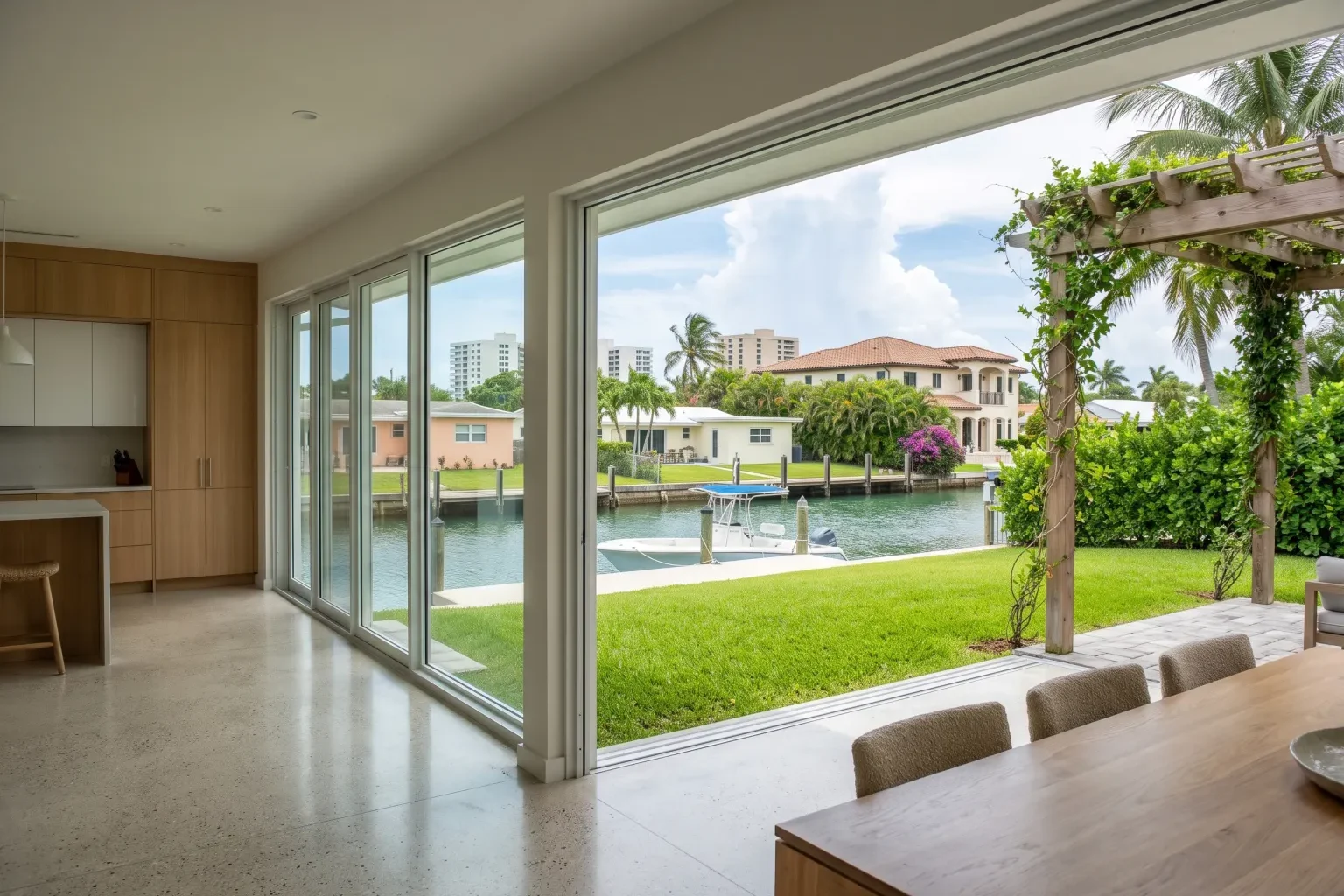
Houses that open to the pool or patio deserve extra thought. Every trip outside lets warm, damp air in, and walls next to sliders can get wet from tracked water or rain blown in during storms. We usually suggest a moisture-tolerant paper for those walls even when the rest of the room uses something more delicate.
- Nonwoven and paste-the-wall papers
- Traditional pre-pasted and unpasted papers
- Solid vinyl and vinyl-coated scrubbable papers
- Textured, embossed and paintable papers
- Grasscloth, cork and other natural fibers
- Ceilings, stairwells and hallways
What we check during the measure
The visit before installation is where most problems get avoided. We measure each wall, note doors, windows and built-ins, and look at the pattern repeat to calculate how many rolls you actually need. Large drop-match patterns can waste a surprising amount of paper, and running short halfway through a room risks a second batch with a slightly different color.
We also look at the wall itself. Paint sheen, texture, old paper underneath, cracks near window corners and signs of past water intrusion all affect the prep plan. In concrete-block homes, an exterior wall that feels cold or shows bubbling paint can point to moisture we want to understand before covering it.
Preparing walls in local homes
Older Lighthouse Point houses frequently have plaster applied directly over block, while newer ones use drywall. Plaster is hard and durable but may have hairline cracks; drywall dents and shows tape seams. Either way, we patch, sand and skim until the surface is flat, then apply a wallpaper primer.
Primer is not optional in a humid climate. It seals porous surfaces so the paste dries evenly, adds grip on painted walls, and protects the drywall face when the paper eventually comes off. Skipping it is the most common reason we see paper lifting at seams on jobs we are called to fix.
Hanging technique that shows up at the seams
We start each room at a point chosen so the last seam, where the pattern rarely lines up perfectly, lands in a low-visibility spot like behind a door. Every strip is hung to a plumb line, matched at the seam, and smoothed from the center out. Corners are wrapped slightly and overlapped with a fresh strip rather than folded tight, which keeps the pattern straight on the next wall.
Trimming at the ceiling, around window casings and above baseboards is done with fresh blades. Paste is wiped from trim and from the paper face before it dries. Switch and outlet plates go back on at the end, with the paper cut neatly behind them.
Climate, storms and keeping paper flat
Between May and October, Broward County is hot and wet, with near-daily afternoon storms. Indoor humidity spikes fast when the AC is set too high or turned off while you are away, and that swing is what loosens seams. Holding the thermostat steady is the single best thing you can do for new wallpaper.
Hurricane season, June 1 through November 30, brings its own risks: power outages, roof leaks and water driven through window frames. If a storm leaves a wet spot on a papered wall, run fans and dehumidifiers to dry it quickly and let us take a look before the stain spreads.
More services in Lighthouse Point
- Wallpaper Removal in Lighthouse PointLocal service & repairs
- Accent Wall Installation in Lighthouse PointLocal service & repairs
- Mural Installation in Lighthouse PointLocal service & repairs
- Grasscloth Wallpaper Installation in Lighthouse PointLocal service & repairs